Tattoo Removal Gangnam, Seoul
Laser tattoo removal on the PicoPlus picosecond platform delivers ultra-short photoacoustic pulses that shatter tattoo ink into micro-particles your immune system clears gradually, with multiple wavelengths matched to different ink colors — newly operated just steps from Gangnam Station in Seoul.
Tattoo Removal
Tattoo Removal
Tattoo Removal · Gangnam Seoul
Laser tattoo removal on the PicoPlus picosecond platform delivers ultra-short photoacoustic pulses that shatter tattoo ink into micro-particles your immune system clears gradually, with multiple wavelengths matched to different ink colors — newly operated just steps from Gangnam Station in Seoul.

Across RE:BERRY Clinics
30,000+ Treatments
Direct Consult & Treatment
Medical Director
Minutes from ICN Airport
Incheon AirportHow does laser tattoo removal work in Gangnam, and what does it cost?
RE:BERRY Gangnam removes tattoos with the PicoPlus picosecond laser: ultra-short pulses create a photoacoustic effect that shatters tattoo ink into micro-particles small enough for your immune system to carry away, so a tattoo fades gradually across a planned series, not in one session. Multiple wavelengths let the physician match the light to different ink colors — dark inks respond best, while greens and blues need specific wavelengths and can be more stubborn. Most tattoos need several sessions spaced 6-8 weeks apart, and complete clearance cannot be promised. Pricing is shared at your consultation, and the same physician reads your ink depth and density before setting any session plan.
Effects & Progress
Effects & Progress
Picosecond pulses shatter tattoo ink through a photoacoustic effect, fragmenting pigment into micro-particles small enough for the immune system to carry away over the weeks between sessions.
The treated tattoo frosts and may look slightly swollen or pink; a dressing is applied and you keep the area clean, covered, and out of the sun as it settles over the following days.
Over the following weeks the immune system carries away the fragmented ink and the tattoo looks gradually lighter, so sessions are spaced apart, never stacked close together.
Fading accumulates session by session — darker inks usually lighten first, while greens, blues, and dense or older ink may need more passes and can respond more slowly. Response varies by individual.
Across the series the physician compares standardized photos; how far a tattoo fades depends on ink, depth, and skin, and complete removal is not always achievable.
Treatment Process
Tattoo Removal — 4 Steps from Consultation to Aftercare
※ Illustrative images are AI-generated to help explain the treatment process.Effects & Progress
Effects & Progress
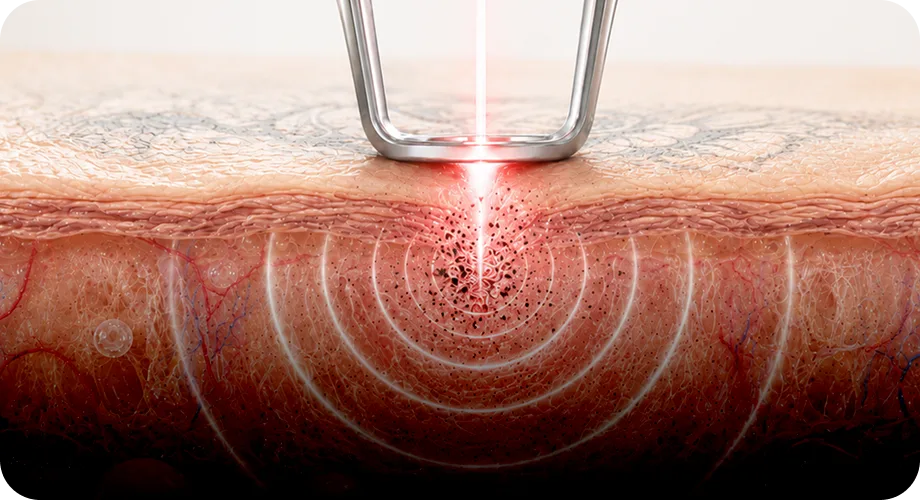
A tattoo persists because the ink particles are too large for the body to clear on its own. Picosecond laser pulses are so brief that they act on the ink through a rapid photoacoustic shock, not prolonged heat, fragmenting the pigment into fine micro-particles. Those smaller particles are small enough for the immune system to carry away over the weeks between sessions, which is why a tattoo fades gradually across a planned series instead of disappearing in one visit.
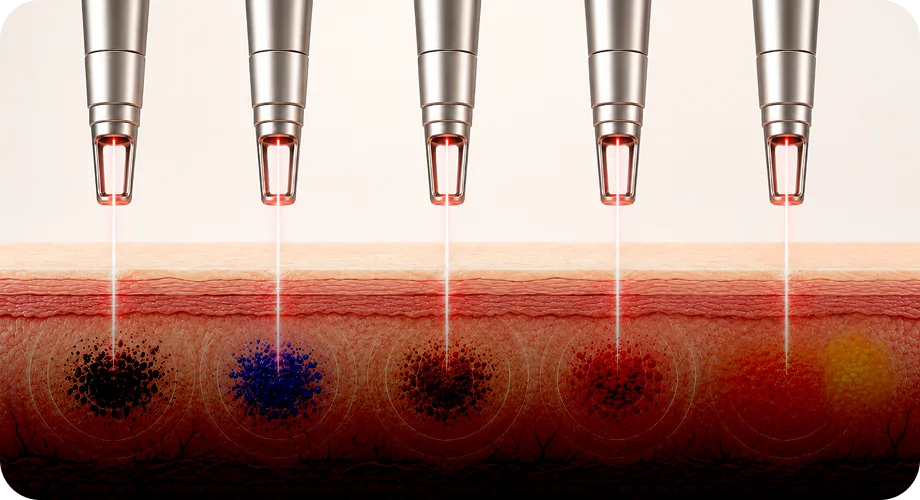
Different ink colors absorb light differently, so a single wavelength cannot treat every tattoo well. The PicoPlus platform offers multiple wavelengths, letting the physician match the light to the ink present. Dark black and blue-black inks respond most readily, while greens and blues, though treatable with specific wavelengths, are among the more stubborn colors and usually take more sessions to fade. Clear expectations for each color are set at consultation, before treatment begins.

Clearance takes time: after each session the immune system carries away the fragmented ink over the following weeks, so sessions are spaced 6-8 weeks apart to let that clearance and skin recovery run their course. This spacing also protects the skin. Post-inflammatory hyperpigmentation and hypopigmentation are recognized risks, more relevant in deeper skin tones, so the physician screens skin type first, uses conservative settings with a patch test, and follows careful aftercare to reduce — though not eliminate — the chance of pigment or textural change.

There is no one-visit erasure. Most tattoos need several sessions — commonly five to ten or more — depending on ink density, how deep the pigment sits, the tattoo's age, and its colors. Many tattoos fade substantially, while dense or multicolor work with greens and blues may lighten meaningfully without reaching a blank slate. The physician at RE:BERRY reads your specific tattoo and sets these expectations before the first pulse, and pricing is shared at consultation once the tattoo has been assessed.
Treatment Process
Tattoo Removal — 4 Steps from Consultation to Aftercare
※ Illustrative images are AI-generated to help explain the treatment process.
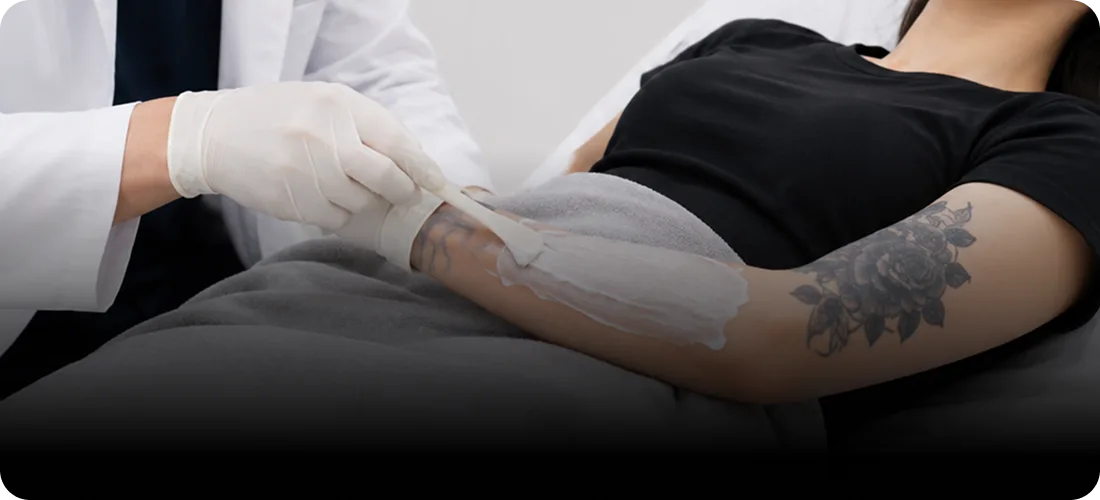
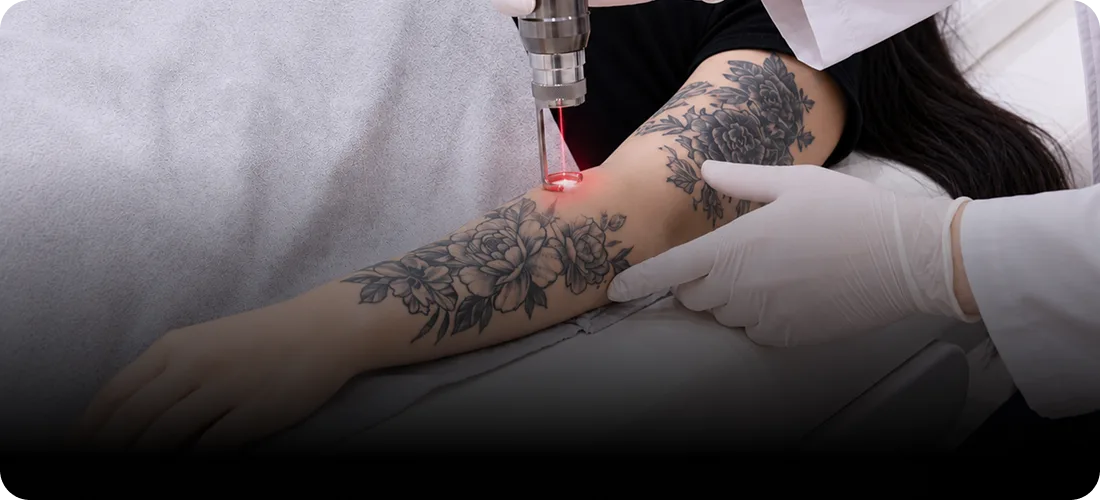
What Picosecond Tattoo Removal in Gangnam Delivers — and How Fading Builds
- Picosecond photoacoustic clearance: the PicoPlus platform shatters ink with ultra-short pulses in place of prolonged heat, fragmenting pigment into micro-particles small enough for immune clearance while sparing more of the surrounding skin
- Multiple wavelengths for different ink colors: the physician matches the light to your ink — dark black and blue-black inks respond best, while stubborn greens and blues call for specific wavelengths, set plainly at consultation
- Realistic session planning, not a fixed promise: most tattoos need several sessions — commonly five to ten or more depending on ink density, depth, and age — with visits spaced 6-8 weeks apart to let clearance and skin recovery run their course
- Eyeliner and eyebrow cosmetic tattoos addressed with protective eye shields and careful wavelength selection, planned conservatively because facial pigment behaves differently from body ink
- Same physician from the first ink reading through every session to your review — your tattoo removal case in Gangnam is never handed to another practitioner mid-course
- Genuine, MFDS-registered device with your skin condition documented under standardized clinic lighting at each visit, so fading is judged from photographs rather than memory
| Timeline | What to Expect |
|---|---|
| The treated tattoo frosts and may look slightly swollen or pink; a dressing is applied and you keep the area clean, covered, and out of the sun as it settles over the following days | |
| The immune system carries away the fragmented ink, and the tattoo looks gradually lighter; this clearance window is why sessions are kept apart, not stacked close together | |
| Fading accumulates visit by visit — darker inks usually lighten first, while greens, blues, and dense or older ink may need more passes and can respond more slowly | |
| The physician compares standardized photos across the series; how far a tattoo fades depends on ink, depth, and skin, and complete removal is not always achievable |
Picosecond (PicoPlus) vs Nanosecond Q-Switched vs Cover-Up — Choosing a Tattoo Path in Gangnam
| Criteria | Picosecond Laser (PicoPlus, RE:BERRY Gangnam) | Nanosecond Q-Switched Laser | Cover-Up or No Removal |
|---|---|---|---|
| Pulse mechanism | Picosecond photoacoustic pulses shatter ink into fine micro-particles | Nanosecond pulses rely more on photothermal effect to break ink | No laser — new tattoo layered over old, or the tattoo is left as is |
| Ink response | Effective across many colors with matched wavelengths; dark inks respond best, greens and blues need specific wavelengths | Works on many inks but can struggle more with fine fragmentation of stubborn colors | Depends entirely on the new design; original ink remains in the skin |
| Particle size after treatment | Smaller fragments, often easier for the immune system to clear | Larger fragments on average | Not applicable |
| Sessions needed | Commonly 5-10+ depending on ink density, depth, and age | Often more sessions than picosecond for comparable fading | Single tattoo session for a cover-up; none if left as is |
| Session spacing | 6-8 weeks between visits for clearance and recovery | Similar spacing between visits | Not applicable |
| Skin-risk profile | PIH and hypopigmentation still possible; conservative settings and careful planning reduce risk | Higher relative reliance on heat can raise pigment-change considerations | No laser risk; tattoo pigment stays in the skin |
| Best when | You want gradual, planned fading with color-matched wavelengths | Only nanosecond equipment is available | You prefer to redesign rather than remove, or accept the existing tattoo |
| Pricing | Shared at consultation after the physician reads size, density, and depth | Varies by clinic and device | Set by the tattoo artist or not applicable |
Why This Matters
The difference between picosecond and nanosecond is the pulse duration: a picosecond pulse is far shorter, so it acts on ink through a rapid photoacoustic shock that fragments pigment into finer particles, while nanosecond lasers lean more on heat. Finer fragments are generally easier for the immune system to clear, so the PicoPlus platform at RE:BERRY Gangnam is used for tattoo removal — though both technologies still require a planned series and neither guarantees complete clearance.
No laser erases a tattoo in one visit. Ink density, how deep the pigment sits, its age, and its colors all shape how many sessions a tattoo needs — commonly five to ten or more — and some tattoos, especially dense or multicolor work with greens and blues, may fade substantially without ever reaching a blank slate. The physician at RE:BERRY Gangnam sets this expectation before the first pulse, not after it.
Korea welcomed 2,011,822 international patients in 2025 — up 72% year on year — yet volume alone says nothing about who follows your case between visits. Because tattoo removal runs across months of spaced sessions, RE:BERRY keeps it with one physician: the doctor who reads your ink depth and color delivers each session and tracks the fading personally.
October–December 2026 Promotions
Exclusive packages for international patients. Swipe to see all offers.

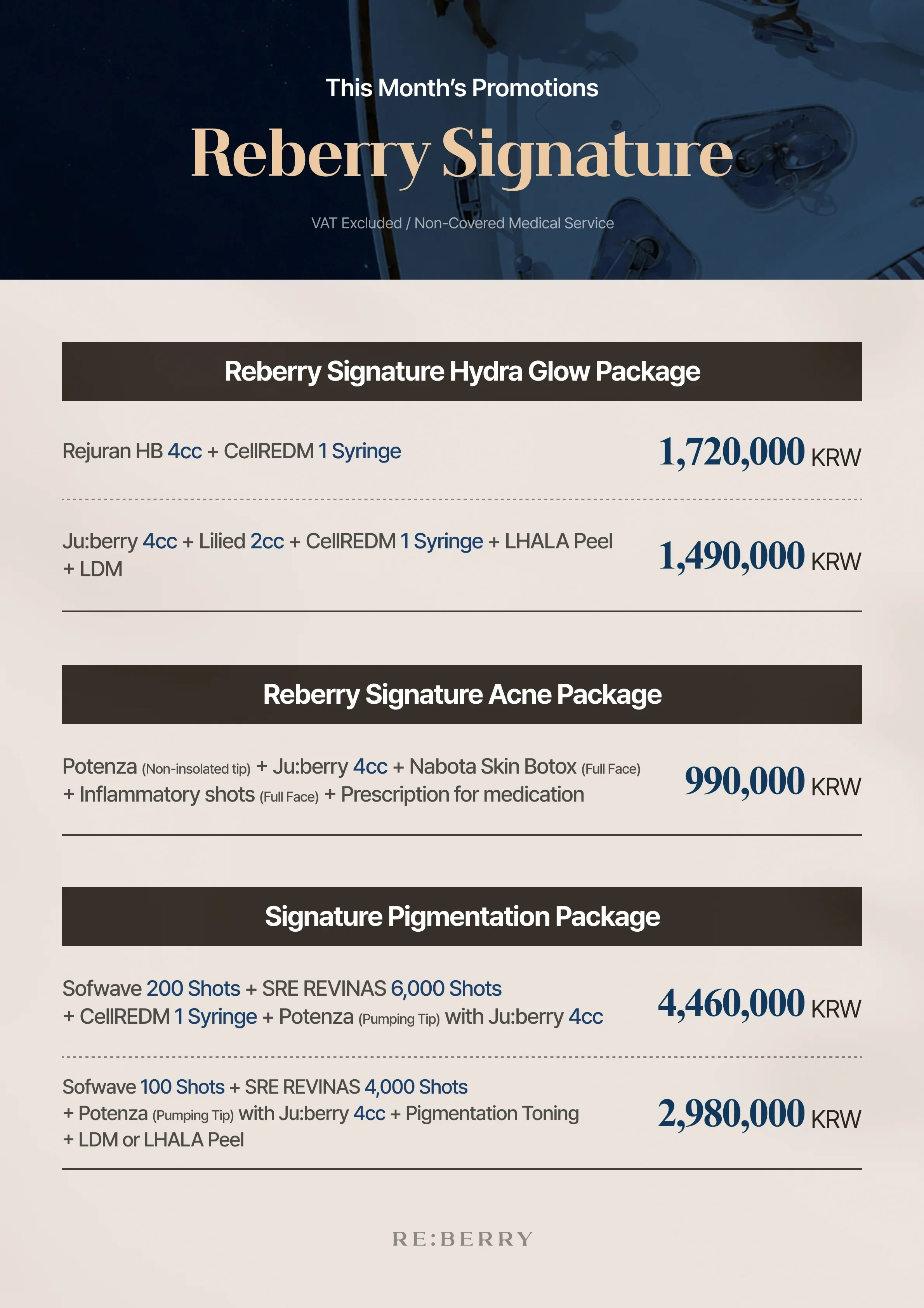


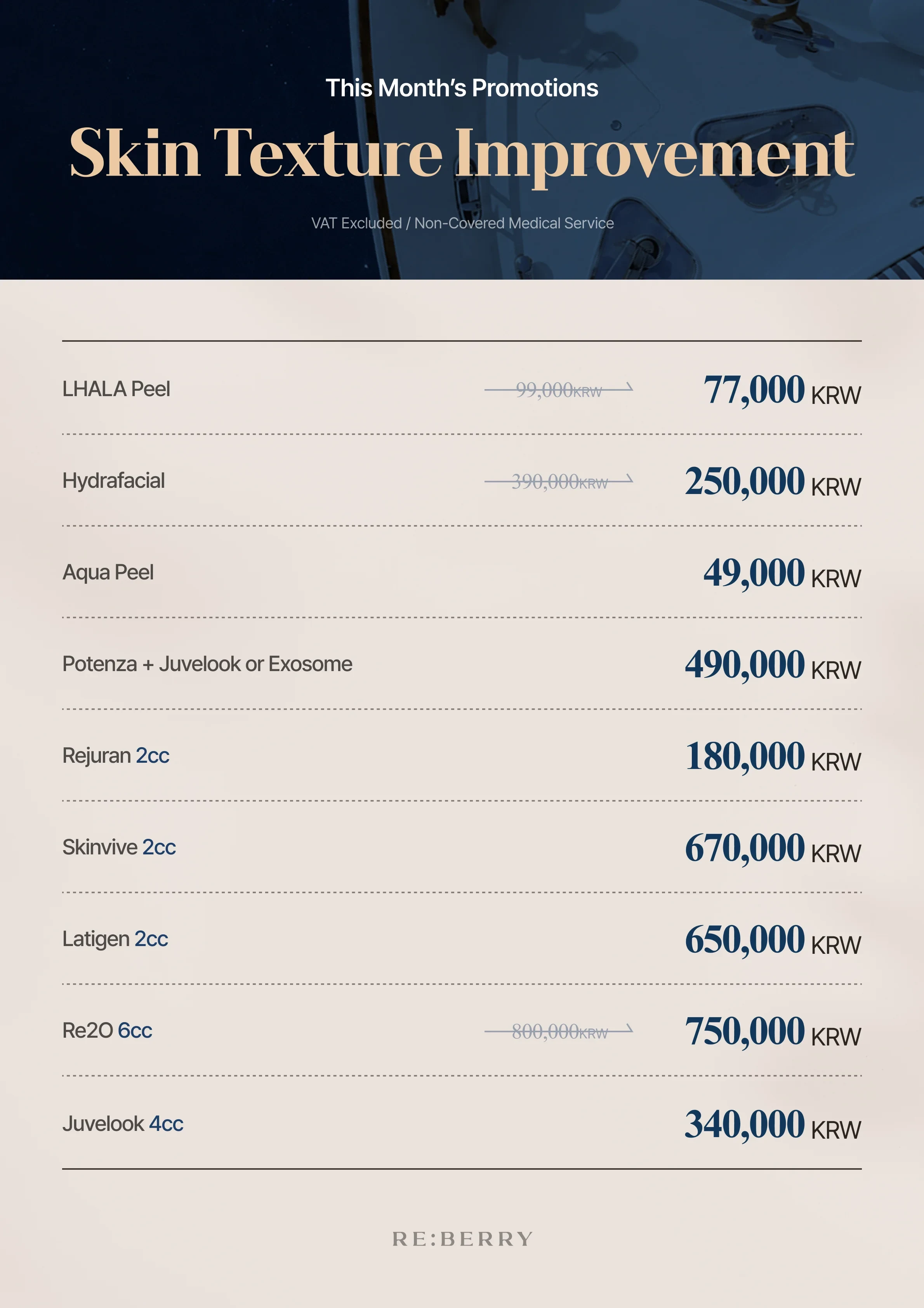
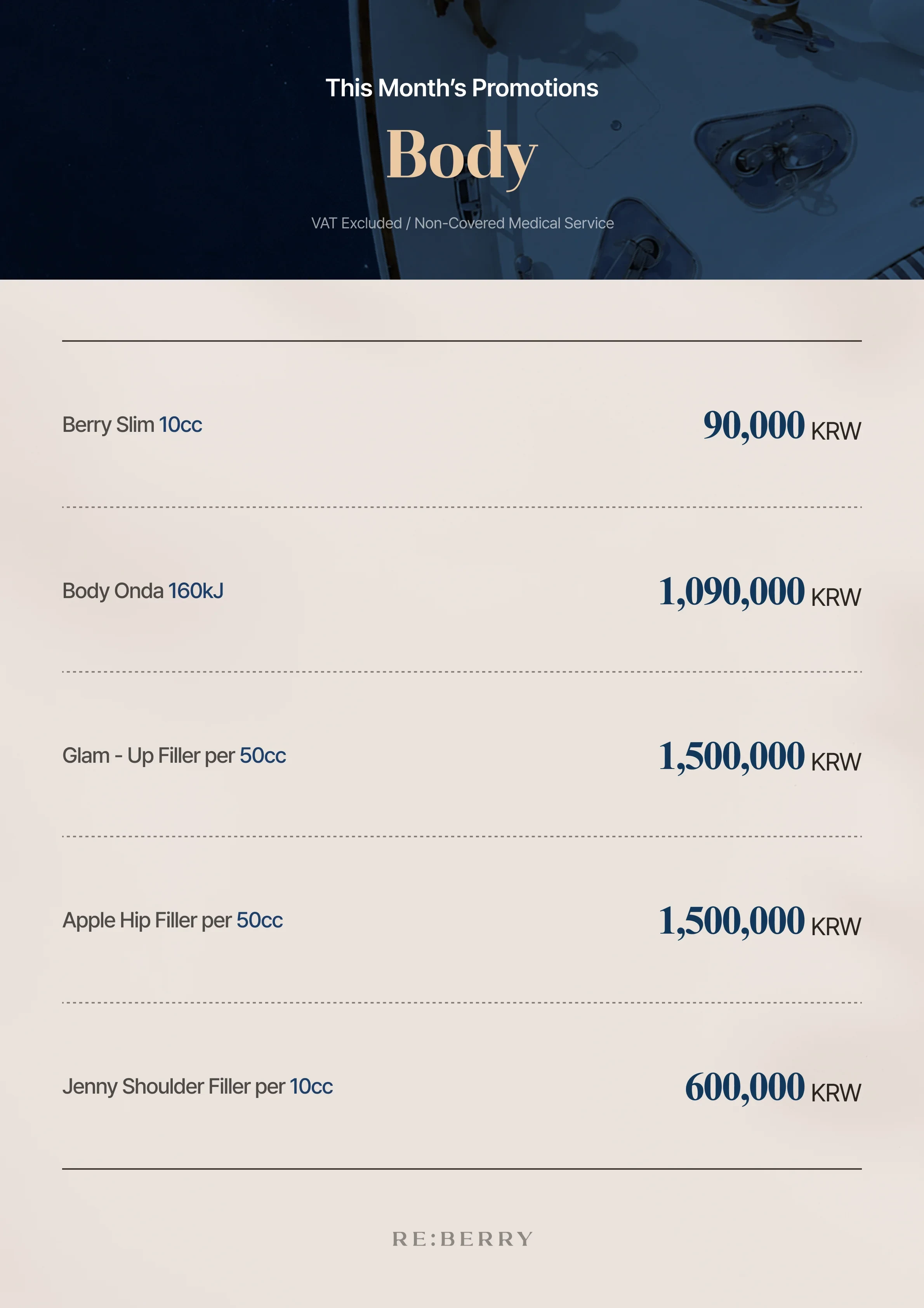

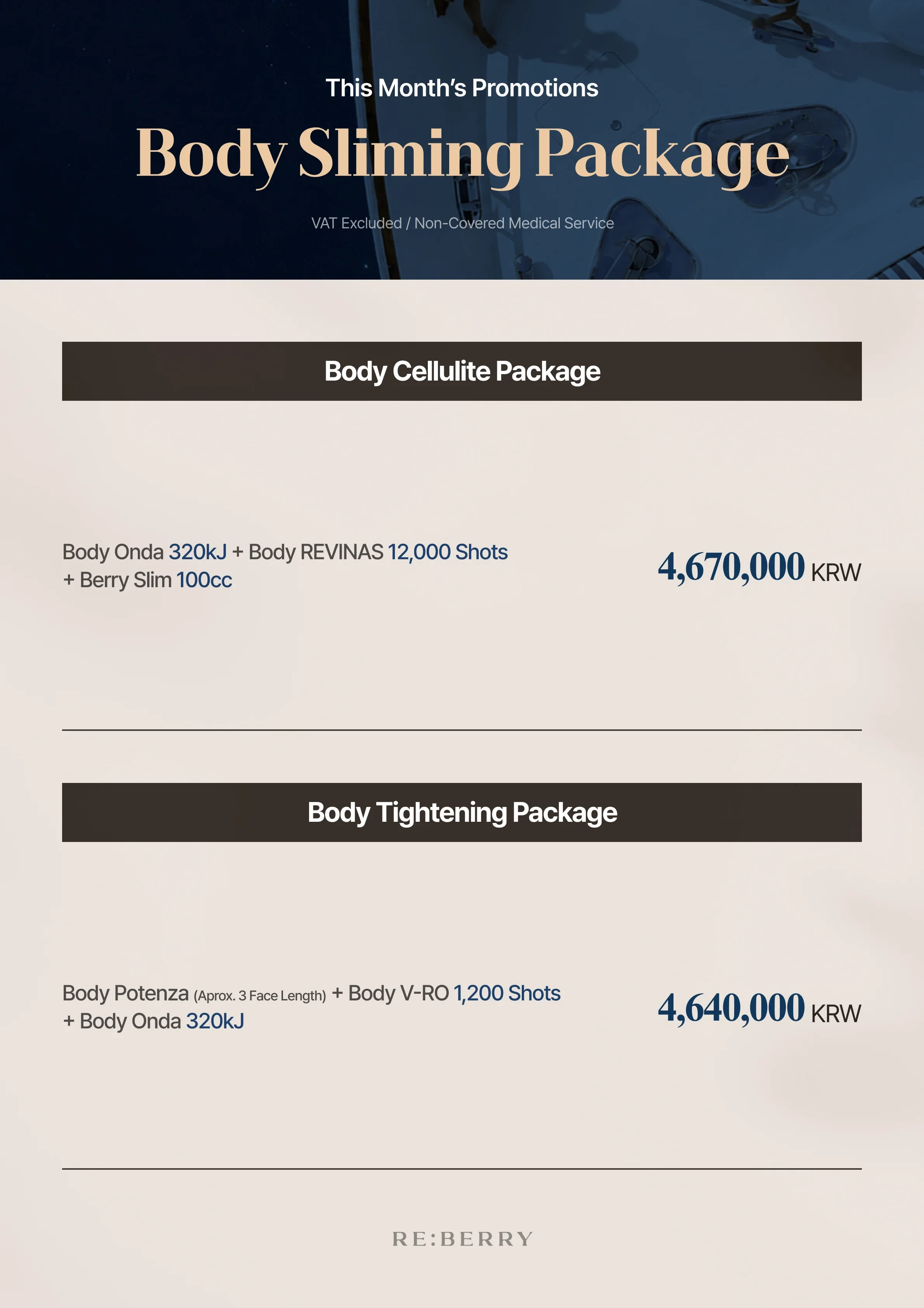
![RE:BERRY Gangnam Page 10 — Body Slimming Package: [Entry] Essence Slim, an introductory Body Onda package that delivers essential synergistic benefits for body shaping and contouring: Body V-RO HIFU 1,000 Shots + Body Onda 160kJ + Body InMode FX 15 Minute + Berry Slim 100cc ₩2,990,000 · [BEST · Doctor Recommended] Signature Contour, our No. 1 satisfaction-rated combined solution, designed to enhance both body contours and skin firmness at the same time: Body V-RO HIFU 1,500 Shots + Body Onda 320kJ + Body InMode FX 30 Minute + Berry Slim 150cc ₩3,990,000 · VAT excluded](https://cdn-gangnamaes.pages.dev/gangnam/promotion/en/gangnam-event-en-10.webp)
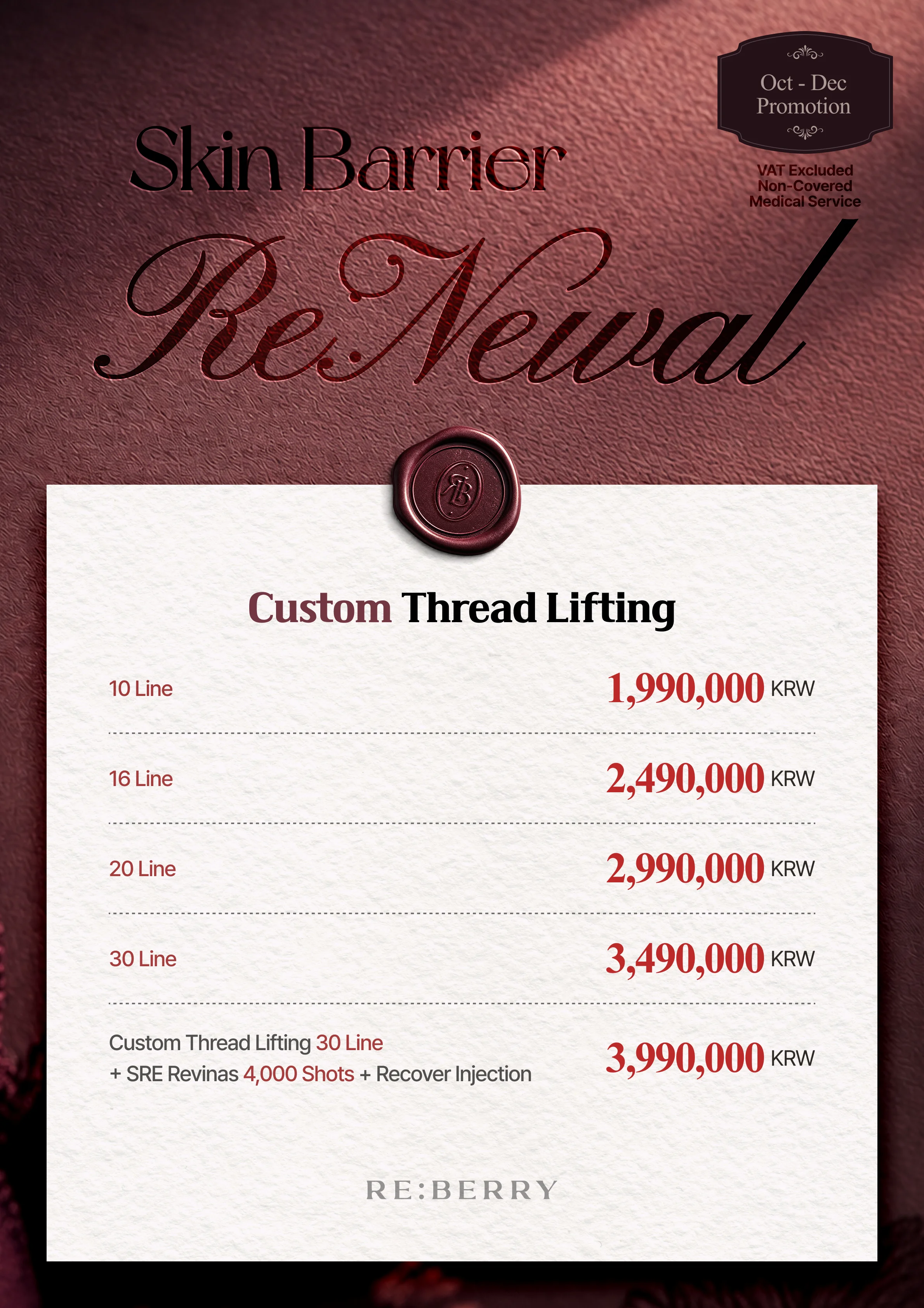

Tattoo Removal Pricing in Gangnam — Shared at Consultation
Your Medical Director

Dr. Yoon-Gon Ryu
- Medical Director, RE:BERRY Aesthetic Clinic Gangnam — Korean MOHW Medical License No.131644
- Manufacturer-appointed KOL invited to teach injection and energy-device technique to Korean peers
- Regular Member, Korean Academy of Aesthetic Medicine
- Co-manages every case with Dr. Yejin Oh (Korean MOHW Medical License No.144238)
- Featured in Authority Magazine (2026)


Medically reviewed by Dr. Yoon-Gon Ryu, CEO / Medical Director, RE:BERRY
A Fourteen-Thousand-Square-Foot Hush Above Gangnam-daero
Step past the black gallery facade and the bustle of Gangnam-daero falls away. Fourteen thousand square feet of hushed corridors, marble installations, a cascading water feature and fully enclosed consultation suites — arranged so you rarely cross paths with another guest, because our reservation-only diary keeps every hour deliberately underbooked.


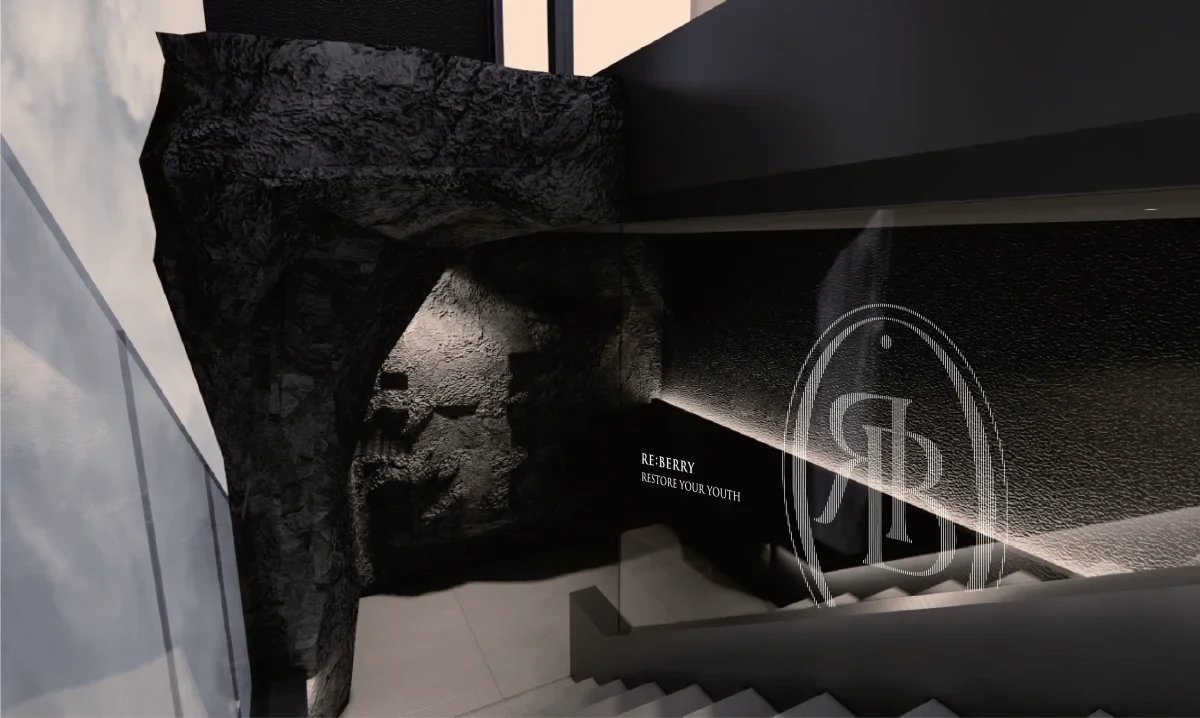


(1,322 m²)
Suites
KI Tower, Gangnam-daero
Station Exit 10
The Evidence Behind Picosecond Laser Tattoo Removal
Picosecond lasers deliver pulses in the trillionths-of-a-second range, far shorter than the older nanosecond Q-switched devices. That ultra-short duration shifts the dominant mechanism from photothermal heating toward a photoacoustic effect: the pulse creates a rapid pressure wave that fractures tattoo ink into smaller particles, which are then cleared by the body's immune cells over the weeks between sessions. A randomized, controlled, within-subject trial comparing a picosecond 755nm laser with a nanosecond Q-switched laser found the picosecond device produced greater tattoo lightening at equivalent settings, supporting the finer-fragmentation rationale.
Brauer JA, Reddy KK, Anolik R, et al. Successful and rapid treatment of blue and green tattoo pigment with a novel picosecond laser. Arch Dermatol. 2012;148(7):820-823. doi:10.1001/archdermatol.2012.901
Clinical series confirm the pattern across ink colors that matters most to patients. A prospective evaluation of a picosecond 755nm alexandrite laser reported that a majority of predominantly black and blue-green tattoos achieved at least 75% clearance within a limited number of treatments, while noting that greens and blues, though responsive to matched wavelengths, remained among the more challenging colors — the factual basis for planning several sessions and declining to promise a fixed count. Multi-wavelength picosecond platforms extend this by pairing 1064nm and 532nm outputs, letting the physician match the wavelength to the ink present.
Saedi N, Metelitsa A, Petrell K, Arndt KA, Dover JS. Treatment of tattoos with a picosecond alexandrite laser: a prospective trial. Arch Dermatol. 2012;148(12):1360-1363. doi:10.1001/archdermatol.2012.2894
Freilich JA, Kaminer M, Reddy KK, et al. Picosecond laser treatment of tattoos: a review of the mechanism and outcomes. Dermatol Surg. 2016;42(9):1027-1037.
Safety is inseparable from expectation-setting. Reviews of laser tattoo removal document that transient hypopigmentation, post-inflammatory hyperpigmentation (PIH), and textural change are recognized risks, more relevant in higher Fitzpatrick skin types common in Asian populations, and that complete pigment clearance is not universally achievable. This is why the physician at RE:BERRY Gangnam reads ink depth, density, age, and color first, uses conservative settings with a patch test, and spaces sessions 6-8 weeks apart: the goal is meaningful, gradual fading with the lowest reasonable pigment-change risk, not an all-or-nothing promise.
Kent KM, Graber EM. Laser tattoo removal: a review. Dermatol Surg. 2012;38(1):1-13. doi:10.1111/j.1524-4725.2011.02187.x
Bernstein EF, Schomacker KT, Basilavecchio LD, Plugis JM, Bhawalkar JD. A novel dual-wavelength, picosecond laser for the treatment of dark and light tattoos. Lasers Surg Med. 2017;49(9):817-825. doi:10.1002/lsm.22391
Questions International Guests Ask About Tattoo Removal in Gangnam
How many sessions does laser tattoo removal take in Gangnam?
It genuinely varies by tattoo: most need several sessions — commonly five to ten or more — depending on ink density, how deep the pigment sits, the tattoo's age, and its colors. The physician at RE:BERRY Gangnam reads all of this in person before giving a session estimate, and sessions are spaced 6-8 weeks apart so the immune system can clear the fragmented ink between visits. The full tattoo-removal line-up is on the Pico laser page.
How much does tattoo removal cost in Gangnam, Seoul?
Pricing is shared at your consultation. Because the fee depends on tattoo size, ink density, depth, and how many sessions your skin will need, the physician confirms per-session and series pricing in writing once your tattoo has been assessed. Send close-up photos on WhatsApp and a coordinator will arrange a consultation slot; nothing is scheduled until you have the figure in writing.
Does laser tattoo removal hurt, and is numbing used?
Most guests describe the picosecond pulses as a series of quick snapping sensations. At RE:BERRY Gangnam topical numbing is applied beforehand and cooling is used during treatment to keep it manageable, and the physician adjusts to your comfort throughout. A patch test at the start also helps gauge how your skin responds before the full session.
Which tattoo colors respond best, and can green and blue be removed?
Dark inks — black and blue-black — respond most readily to the picosecond pulse. Greens and blues can be removed but need specific wavelengths and are among the more stubborn colors, so they typically take more sessions and may fade more slowly. The PicoPlus platform offers multiple wavelengths so the physician can match the light to the ink present, and clear expectations for each color are set at consultation.
Can you guarantee my tattoo will be completely removed?
No — complete removal is not always achievable, and the clinic does not promise it. How far a tattoo fades depends on ink density, depth, age, and color; many tattoos fade substantially, while dense or multicolor work with greens and blues may lighten meaningfully without reaching a blank slate. The physician at RE:BERRY Gangnam sets realistic expectations from your specific tattoo before the first session.
What are the risks — can it cause scarring or pigment change?
The main considerations are temporary redness, swelling, and blistering as the skin heals, and pigment changes: post-inflammatory hyperpigmentation (PIH, darkening) or hypopigmentation (lightening), which are more relevant in deeper skin tones. The picosecond approach and conservative settings are chosen to reduce these risks, but they cannot be eliminated. The physician screens your skin type first and follows careful aftercare to lower the chance of textural or pigment change.
Why are sessions spaced 6-8 weeks apart?
After each session the laser fragments the ink into micro-particles, and your immune system then carries them away over the following weeks — that clearance is what makes the tattoo fade. Spacing sessions 6-8 weeks apart gives the skin time to recover and the body time to clear the ink, which protects the skin and lets each session build on real fading, so no pass is wasted on pigment that hasn't cleared yet.
Can you remove eyeliner or eyebrow cosmetic tattoos?
Yes, eyeliner and eyebrow cosmetic tattoos can be addressed, but they are planned conservatively because facial pigment behaves differently from body ink and the lid area is delicate. The physician at RE:BERRY Gangnam places protective eye shields, selects the wavelength to match the pigment, and spaces sessions carefully. Some cosmetic pigments can shift shade during treatment, which is discussed openly at consultation.
How is picosecond different from older nanosecond tattoo lasers?
The pulse is far shorter. A picosecond pulse fragments ink mainly through a rapid photoacoustic shock, producing finer particles that the immune system generally clears more easily, while older nanosecond Q-switched lasers rely more on heat and leave larger fragments.
| Feature | Picosecond (PicoPlus) | Nanosecond Q-switched |
|---|---|---|
| Main mechanism | Photoacoustic | More photothermal |
| Fragment size | Finer | Larger |
| Sessions | Often fewer for comparable fading | Often more |
What aftercare does tattoo removal need?
Aftercare is important for a good result: keep the treated area clean and covered, apply any soothing ointment as directed, and do not pick or scratch scabs, which protects against scarring. Avoid saunas, swimming pools, and intense heat while it heals, and use daily sun protection on the area between sessions, since sun exposure raises the risk of pigment change. RE:BERRY Gangnam includes WhatsApp follow-up in English to review your healing.
How should I plan my Seoul trips around the session spacing?
Because sessions are spaced 6-8 weeks apart, most international guests plan the series across several separate visits — a single trip rarely covers it. Many do one session per Seoul stay and time their return around the spacing, tracking fading with the clinic on WhatsApp in between. During your consultation the physician will map a realistic timeline so you can plan travel around it.
Am I a good candidate for laser tattoo removal?
Good candidates want gradual, planned fading and understand that several sessions are usually needed. The physician screens your skin type, the tattoo's ink, depth, age, and colors, and any history of keloid scarring or pigment issues. Removal is generally not scheduled over active infection or sunburned skin, or during pregnancy. If removal isn't ideal for your case, the physician will say so and discuss alternatives such as a cover-up.
How do I book tattoo removal in Gangnam as a foreign visitor?
Message RE:BERRY on WhatsApp with close-up photos of your tattoo, its age, and how it was applied — a coordinator replies in English as soon as possible and arranges a consultation slot. The clinic is reservation-only for international guests, staff interpreters cover 5 languages, and the physician reads your tattoo in person and shares pricing before any session is scheduled. Related laser options are on the laser treatment page.
Where exactly is the clinic, and how do I get there from Gangnam Station?
RE:BERRY sits inside KI Tower on Gangnam-daero, a 2-minute walk from Gangnam Station Exit 10 on Seoul Metro Line 2 — 45-60 minutes from Incheon Airport by AREX plus subway or by direct taxi. Being steps from the station means your tattoo removal appointment slots cleanly between Gangnam sightseeing, dining, and shopping.
Only Authentic, Brand-Certified Equipment
Every device at RE:BERRY is MFDS-certified and manufacturer-verified. We never use counterfeit or grey-market equipment.


Book Your Tattoo Removal Consultation in Gangnam
Send close-up photos of your tattoo and your travel dates to RE:BERRY on WhatsApp — a coordinator replies as soon as possible to arrange a consultation. The physician reads your ink depth, density, and color in person, sets a grounded session plan, and shares pricing in writing before anything is scheduled. The same physician who reads your tattoo delivers every session and reviews your fading.
Why Tens of Thousands of Foreign Patients Are Choosing This Gangnam Clinic — Business Wire, 2026-04-13
Numbers That Tell Our Story
Real procedures performed.
Brand-Authenticated Equipment & Training




Our doctors are certified by Korea's top dermatological societies









Latest from Our Instagram
Real treatments, patient reactions, and behind-the-scenes from RE:BERRY.
Tap any video for sound & fullscreen
What our patients say
Real verified reviews from our Google Business Profile
I had a really nice experience at Reberry Clinic Gangnam. I received a Hydrafacial treatment, and the whole process was very comfortable. The staff were kind and explained everything clearly, and the clinic itself felt clean and relaxing. I also loved the interior — the clinic felt very clean, elegant, and luxurious, w...
I had such an amazing experience at this clinic! The clinic itself is absolutely stunning the design is beautiful, elegant, and luxurious, and the service is truly top-notch. Everything was so well organized, and I felt very comfortable from the moment I walked in.
I had a Korean filler treatment to reduce my nasolabia...
i had a good time having the Juvelook treatment!
It was my first time in Korea, all the Doctor & team are bery helpful. Dr. Ian & cheong a lee(jenny) are really helpful.
I understand more about my skin.
The clinic is calm, welcoming.
there are many activities i didn’t expect to find in a beauty clinic; phot...
So happy to found the beauty clinic in Korea that very inclusive and Muslim friendly. They have a prayer space for muslim and they prepare a female doctor for me. The clinic is so comfortable with aesthetic design make me feel relaxed. The doctor and the staff are very professional and helpful so all of the procedure r...
As someone who has struggled with acne since middle school, I decided to stop here during a layover in Seoul and was amazed by the treatment.
Firstly, the environment is elegant and peaceful. Feels very luxurious and the treatment from staff was as such as well. Speaking of staff, they were extremely professional, car...
Book Your Personalized Consultation
Share your details and our multilingual team will contact you as soon as possible through your preferred messenger.
- ✓ Free online skin consultation with a doctor
- ✓ Personalized treatment plan & pricing
- ✓ Airport pickup available only at the Incheon Airport branch
- ✓ 5-language support (EN/ZH-CN/ZH-TW/JA/ES)
- ✓ Response as soon as possible via your preferred messenger
Science Picosecond laser tattoo removal — peer-reviewed references
Picosecond laser tattoo removal rests on a decade of peer-reviewed evidence. The mechanism shift from nanosecond photothermal heating to picosecond photoacoustic fragmentation was demonstrated in early controlled work: Brauer (2012) showed a picosecond 755nm laser rapidly cleared blue and green pigment that had historically resisted nanosecond devices, and Saedi (2012) reported that a majority of predominantly dark and blue-green tattoos reached at least 75% clearance in a limited number of picosecond sessions. Freilich (2016) synthesized the mechanism and outcomes across the picosecond literature, while Bernstein (2017) validated dual-wavelength picosecond platforms that pair 1064nm and 532nm to match different ink colors. Safety and expectation-setting are grounded in Kent and Graber (2012), whose review documents that hypopigmentation, post-inflammatory hyperpigmentation, and incomplete clearance are recognized outcomes to plan for upfront.
- Brauer JA, Reddy KK, Anolik R, et al. Successful and rapid treatment of blue and green tattoo pigment with a novel picosecond laser. Arch Dermatol. 2012;148(7):820-823. doi:10.1001/archdermatol.2012.901
- Saedi N, Metelitsa A, Petrell K, Arndt KA, Dover JS. Treatment of tattoos with a picosecond alexandrite laser: a prospective trial. Arch Dermatol. 2012;148(12):1360-1363. doi:10.1001/archdermatol.2012.2894
- Freilich JA, Kaminer M, Reddy KK, et al. Picosecond laser treatment of tattoos: a review of the mechanism and outcomes. Dermatol Surg. 2016;42(9):1027-1037.
- Bernstein EF, Schomacker KT, Basilavecchio LD, Plugis JM, Bhawalkar JD. A novel dual-wavelength, picosecond laser for the treatment of dark and light tattoos. Lasers Surg Med. 2017;49(9):817-825. doi:10.1002/lsm.22391
- Kent KM, Graber EM. Laser tattoo removal: a review. Dermatol Surg. 2012;38(1):1-13. doi:10.1111/j.1524-4725.2011.02187.x
- Ho SG, Goh CL. Laser tattoo removal: a clinical update. J Cutan Aesthet Surg. 2015;8(1):9-15. doi:10.4103/0974-2077.155066
These references shape the tattoo-removal protocol at RE:BERRY's Gangnam aesthetic clinic on the PicoPlus picosecond platform: the treating physician reads ink depth, density, age, and color before any pulse; wavelength is matched to the ink present, with straightforward counsel that dark inks respond best and greens and blues need specific wavelengths and more sessions; conservative settings and a patch test address post-inflammatory hyperpigmentation and hypopigmentation risk; sessions are spaced 6-8 weeks for immune clearance; and standardized-lighting photographs track fading across the series under the same licensed physician. Complete removal cannot be promised. This information is for educational purposes only and is not medical advice.
How to Find RE:BERRY Gangnam
2 minutes from Gangnam Station Exit 10. B1–B2, KI Tower — the building with the all-black entrance you can't miss.
RE:BERRY Gangnam Aesthetic Clinic
B1–B2, KI Tower, 69-gil 8, Gangnam-daero, Seocho-gu, Seoul
서울시 서초구 강남대로69길 8, 지하1·2층 (KI타워)